

Eyebrow Lift Surgery
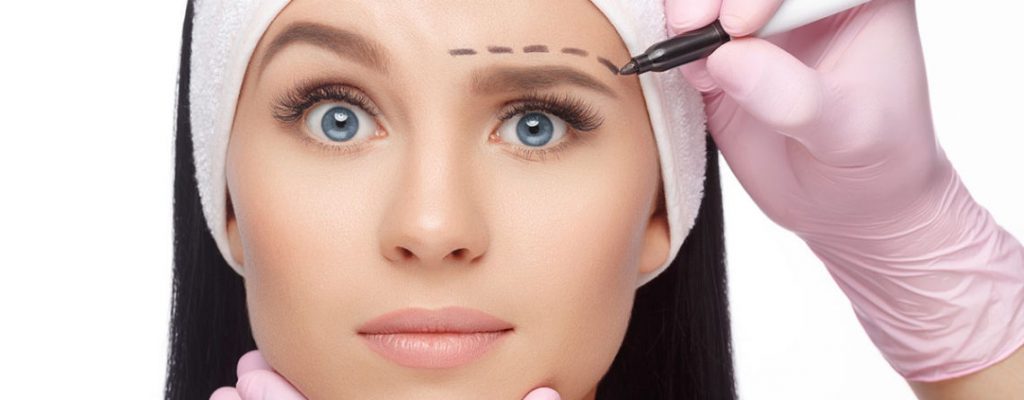
Eyebrow Lift Surgery
The effects of aging on the body are inevitable. With age, the skin begins to lose its elasticity. Wrinkles and sagging are seen in different parts of the body, especially on the face. The first signs of aging are usually seen in the eyebrow and forehead area. The sagging of the eyebrows and upper eyelids can gather above the eyes as time passes and reach a level that makes vision difficult. Sagging eyebrows, which affect the facial expression, can also cause a tired, angry or tense appearance.
What are the Eyebrow Lifting Methods?
Eyebrow lifting can be applied by surgery or methods that do not require surgical procedures, depending on the need. Both procedures have advantages and disadvantages. Surgical methods include eyebrow suspension, classical eyebrow lift and endoscopic eyebrow lift; Botox and ultherapy can be given as examples of non-surgical methods.
How to Lift Eyebrows with Botox?
Eyebrow lift application with botox is started by designing an appropriate eyebrow shape for the person’s face. The eyebrow is pulled to the position it should be on the face, making it more compatible with the face; It is aimed that the person has a softer, vigorous and healthy appearance. Eyebrow lift operation with botox is applied by expert plastic surgeons by planning with golden ratio calculations.
The operation is applied in small doses so as not to prevent the natural movement of the eyebrow and to minimize the deterioration in the muscles. Since it is a non-surgical procedure, the operation can be completed in a very short time, between 2-10 minutes. During the procedure, botulinum toxin is injected with fine-tipped needles to the predetermined points in a way to raise the eyebrow. The effect of eyebrow lift application with Botox becomes more apparent a few days after the procedure. The most important advantage of the operation is that there is no scar on the face after the procedure. Although it differs from person to person, it is recommended to repeat the botox injection process for an average of 4-6 months, that is, twice a year, in order to maintain the position of the eyebrow. If you want to raise your eyebrows but are afraid of surgical procedures, you can prefer eyebrow lift with botox.
How to Lift Eyebrows with Ultherapy?
Ultherapy HIFU (High-Intensity Focused Ultrasound) is the general name of a system that tightens the skin and regenerates it as much as possible with high-intensity focused ultrasound energy. Ulthera, ultra skin, doublo are some of these treatment devices. Most laser or radiofrequency systems only affect the skin, they do not affect the deep tissues or facial structures under the skin. Because their effects are on the skin and can only reach a depth of 1-2 mm. Therefore, as can be understood, the effects of such applications are limited only to the skin. With Ultherapy treatment, it is possible to reach 4.5 mm deep into the skin without any scar on the skin. With Ultherapy, the duration of eyebrow lift is 10 minutes on average. Although the effects of the ultherapy process are seen immediately, it reaches the desired maximum effect in an average of 3 months.
What is Classical Eyebrow Lift Surgery? How is it Done?
Another name for classical eyebrow lift surgery is temple lift surgery. The operation is applied by removing the scalp from the temple part of the individual and stretching this area. The biggest disadvantage of this operation is that the long stitch lines made into the scalp expand over time and create balding islands. Considering the possibility of the scalp losing its elasticity over time, the permanence of the classical eyebrow lift operation may not take as long as desired.
What is Endoscopic Eyebrow Lift Surgery? How is it Done?
Many different methods can be applied in brow lift surgeries, but the most frequently applied and most popular method is the procedures performed with the help of small and thin cameras called endoscopes, without making any incisions and without leaving a trace. It can be easily applied under local anesthesia supported by general or sedation under operating room conditions in the hospital. In endoscopic eyebrow lift surgeries, it is possible to perform the surgery by opening small holes at several different points in the inner parts of the scalp without causing almost any bleeding and leaving a scar. Thanks to this method, the formation of scars (scars) that occurs in the old methods is prevented and the recovery period is much shorter with less swelling. After the operation, the use of pain relief tablets is sufficient, there is no disturbing pain. Stitches are removed after an average of 10 days. Since the scar of the operation will remain in the scalp, there is no problem such as scarring. Compared to botox, your eyebrows can stay in the desired position for a much longer time and the procedure does not need to be repeated at regular intervals, as in eyebrow lifting with botox. In short, with endoscopic eyebrow lift application, much more permanent results can be obtained compared to non-surgical applications.
What is Eyebrow Strap Method? How is it Done?
Eyebrow suspension is a method that can be easily applied under local anesthesia. The eyebrow can be hung in the desired position with a stitch that is passed through a small hole opened from the front border of the hairline. The disadvantage of this method is that the desired effect is not permanent for a long time, and the eyebrows fall back to their old places after a while. Although newly developed special spinners are used to overcome this problem, eyebrows can return to their previous state between 6 months and 2 years depending on the frequency of using the mimic movements of the person. This means that the method has to be repeated. Although it is one of the frequently used techniques when looking at the general orientation, its disadvantages should be evaluated under the supervision of a specialist physician.
How is the Recovery Process After The Eyebrow Lifting Surgery?
After the eyebrow lift or forehead lift surgery, tape and dressing are applied around your eyebrows and on your forehead. During this period, by applying a cold compress to your forehead, you can help the edema go down faster than normal. In the postoperative period, swelling may occur on your forehead and these swellings are perfectly normal. However, bruising is not common. In case of bruising, it is recommended to contact your doctor. On the third day after the operation, it is possible to wash the hair carefully, without damaging it too much. Sutures are removed on the seventh day after surgery. Patients usually feel much better at the end of the first week after surgery, with mild swelling on their forehead disappearing. You may experience difficulty moving your eyebrows and forehead and numbness in your forehead temporarily after the surgery. All these are expected in the normal healing process of the surgery. If you experience an unexpected situation during the recovery period after eyebrow lift surgery, you should contact your specialist doctor immediately.
How Should the Ideal Eyebrow Be?
Of course, everyone has an eyebrow shape suitable for their face shape and appearance, but it is possible to talk about the concept of “ideal eyebrow” based on general tastes. There are ideal eyebrows according to face types. Suitable for most faces, the inside of the first two-thirds of the eyebrow is upward, the outside of the third is slightly downward, and the starting point on the inside is lower than the end point on the outside. People with round faces are recommended to have sharp-angled eyebrows, those with oval faces to have slightly angled eyebrows, long-faced people to have flat eyebrows, and those with square or angular faces to have arc-shaped eyebrows. The length of the eyebrow is as important as the type of the eyebrow. One of the common mistakes is that the higher the eyebrow, the better it will look. This belief is not true and raised eyebrows may not suit every face.
It is recommended that you choose the most suitable method for eyebrow lifting together with your specialist and follow your doctor’s recommendations during the application process.