

Dermabrasion
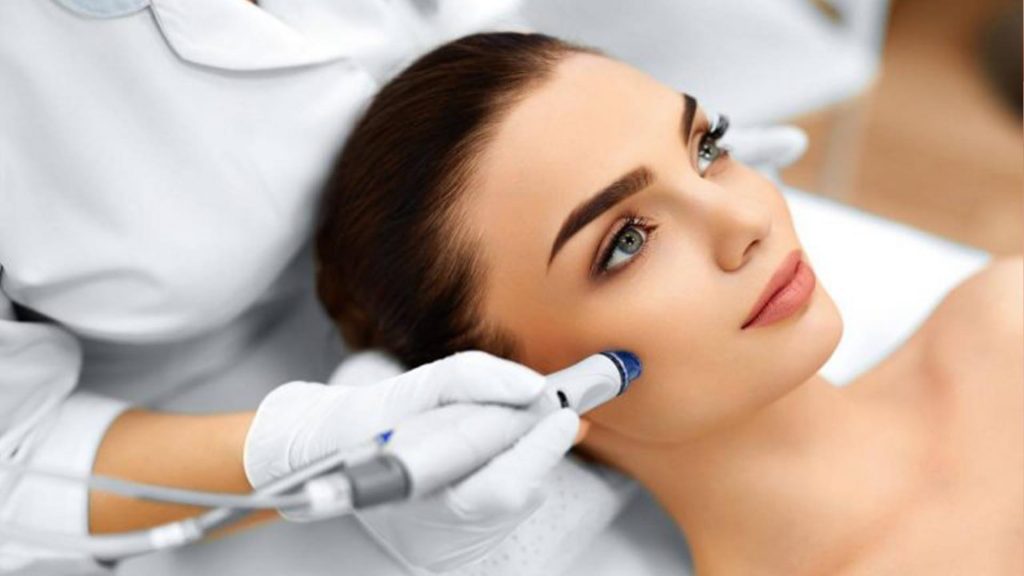
Dermabrasion
Dermabrasion is an intensive peeling method. During this procedure, the skin is shaved surgically to reduce the appearance of scars, wrinkles and pigmentation. However, if you want a lighter skin peeling technique, you can try microdermabrasion.
Dermabrasion is a tested and approved method. Compared to the laser method, it offers more advantages in skin peeling. The biggest advantage is that you can see the level of depth you want to achieve. Therefore, this is more important in correcting scars and removing fine wrinkles. Because in a method that goes too deep, scars may get worse or pigmentation problems may occur; If you stay on the surface too much, it won’t be very successful.
What is the difference of Dermabrasion from Other Peeling Procedures?
Dermabrasion is a mechanical procedure. Generally, it is applied to local, larger areas, it should be done with general anesthesia. For chemical peeling, anesthesia won’t be applied. The deepest chemical peeling agent does not exfoliate as deeply as dermabrasion. Laser is the peeling process applied using a beam. The peeling effect is more limited. Dermabrasion is preferred to other methods as it gives better results in correction due to puberty acne and scars caused by trauma.
Considerations Before Dermabrasion?
The use of medicines that increase bleeding such as aspirin should be discontinued before dermabrasion. Smoking should be paused for 1-2 weeks after surgery. If there are active pimples, dermabrasion should be delayed until the pimples are gone.
How Is Dermabrasion Applied?
Dermabrasion can be applied with local or general anesthesia depending on the width of the area to be applied, but also to the whole part of the face that includes the problematic area. For example, dermabrasion should be applied to the whole forehead for a small scar. The purpose of this is to prevent the formation of tone difference and to provide a homogeneous appearance. The process takes up to approximately 1-1.5 hours. More than one session may be required. The application is done with the help of a motor that quickly rotates the stone with diamond or wire emery at the end. Swelling may occur on the skin after process. The patience may have pain, especially while chewing hard foods. The swelling regresses in a few days to a week. There may be crusting in the area. Men should not shave for a few days. Shaving with a machine recommended in the first days after the wound has healed.
What Should Be Considered After The Dermabrasion Procedure?
After dermabrasion, thin gauze peds impregnated with antibiotic pomades are placed on the wound. Depending on the depth of the procedure, new cell development will be completed between 7-14 days, and these gauze pads attached the body will be poured. At the end of the second week, you can return to work life. However, sunscreen creams must be used. The effect of dermabrasion occurs after 3 months. Redness can be seen in the areas where the procedure is applied for 4-6 weeks. Dermabrasion is a method that reduces skin irregularities and especially preferred in correcting acne scars and traumatic scars. In these cases, more effective results can be obtained with 2-3 sessions performed with 6-8 months intervals. It is imperative not to be exposed to direct sunlight for 6-12 months until the skin color completely returns to the normal.
Can Dermabrasion be Applied to Everyone?
Dermabrasion can be applied to anyone of all ages, men and women. However, older people recover more slowly after dermabrasion. On people with darker skin color, color changes and spots can be permanently seen. Therefore, treatment options other than dermabrasion can be chosen in the treatment of these patients. On people with sensitive allergic skin, allergic reactions and herpes lesions may exacerbate after dermabrasion.
Is Anesthesia Applied in Dermabrasion?
Those who have dermabrasion usually receive local anesthesia. Sedation or local anesthesia is applied depending on the area to be applied. General anesthesia can be applied if different facial aesthetics procedures are also applied with the skin peeling procedure. In general anesthesia, the person can usually rest in the hospital for 1 day, and in local dermabrasion procedures, the person can return to his/her social life on the same day.